


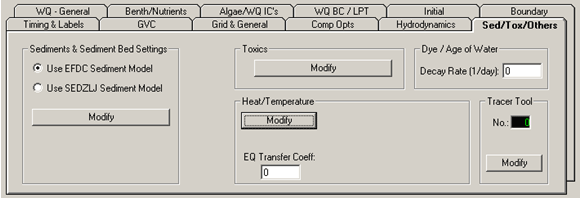
EFDC_Explorer has power sediment transport modeling capabilities. The user interface is intuitive and comprehensive. The tab whereby the user opts to modify sediments is shown below. The user may select from EFDC Sediment Model. The SEDZLJ Sediment Model is currently under development for EFDC_Explorer.
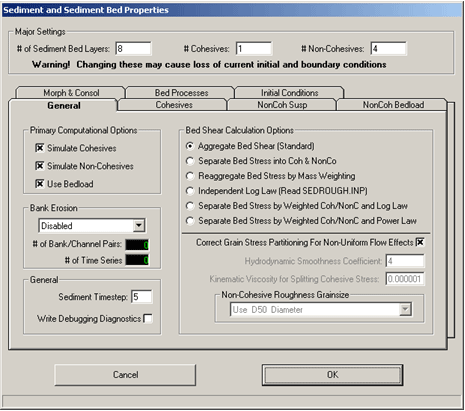
In the “General” tab the user can tell EFDC whether or not to simulate cohesives and non-cohesives and the approach to compute bed shear stresses for sediment transport. The “Bed Shear Calculation Options” allows the user to choose from a number of different calculation options for bed shear stress computations.
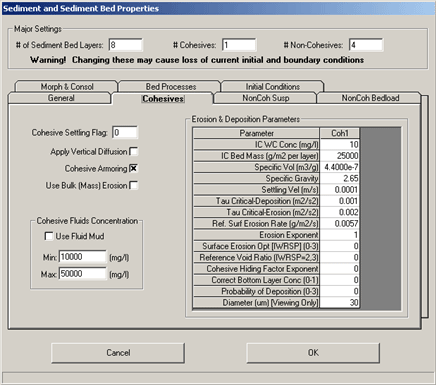
An example of the “Cohesives” tab in the Sediment Transport form is shown below. The number of columns shown in the input parameter grid varies with the number of classes to be modeled. The Diameter setting located at the bottom of the parameter grid sets the grain size that will be used in calculating d50's for the sediment bed.
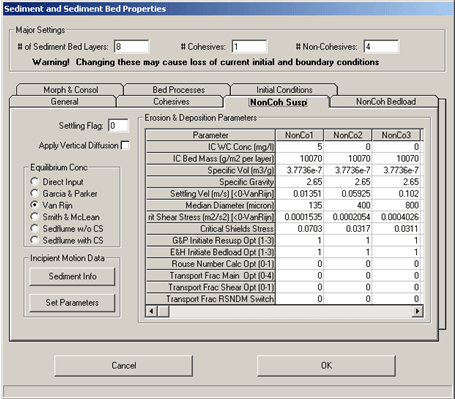
The “Non-Cohesives Suspended” tab shown below. . Grain size for each non-cohesive class is required for the sediment transport computations. This value is also used as the grain size for the d50calculations.
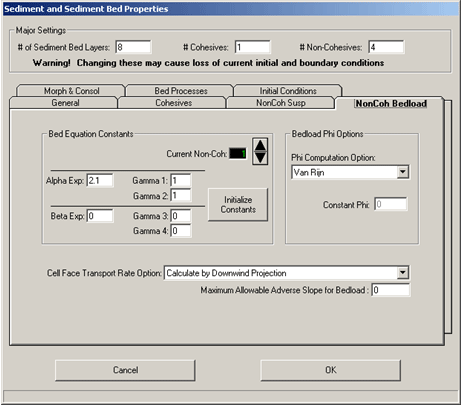
The tab for the “Non-Cohesives Bedload” is shown below. The “Bedload Phi Options” frame allows the user to choose from the following options” Constant/Manual, Van Rijn, Engelund-Hansen, and Wu, Wang &Jia.
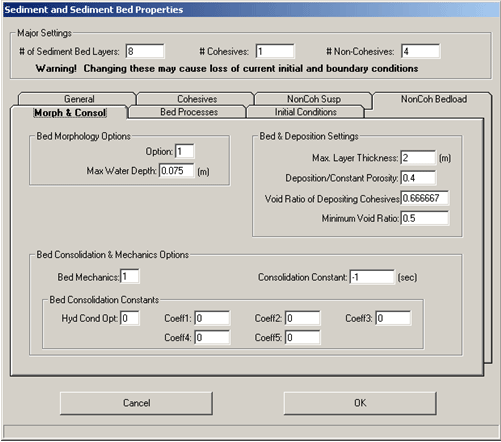
The tab for the “Morphology & Consolidation” of the sediment properties option is shown below. In this tab the user may specify various bed consolidation and bed morphology settings.
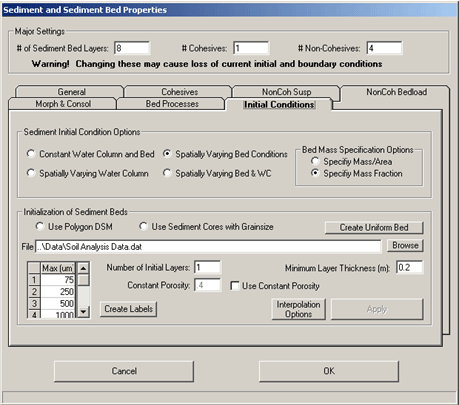
In the “Initial Conditions” tab the user selects how they would like to initialize the bed sediments for the model. This is done by selecting the option from the “Sediment Initial Conditions Options” frame. These options include: Constant Water Column and Bed; Spatially Varying Water Column; Spatially Varying Bed Conditions; and Spatially Varying Bed and Water Column. The Bed .
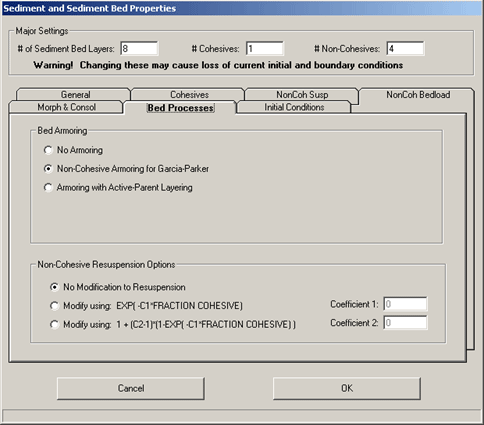
The user options for the Bed processes tab are shown in below. EFDC_Explorer now employs bed armoring functionality, allowing the user the options of: Armoring; Non-Cohesive Armoring for Garcia-Parker; and Armoring with Active Parent Layering.
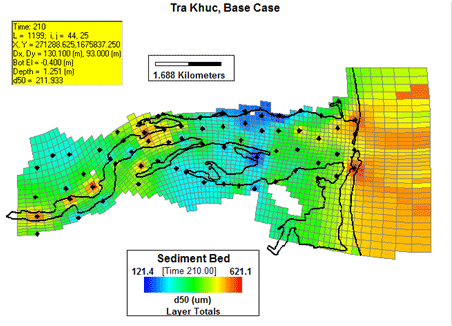
A very useful feature in EFDC_Explorer is its ability to build the EFDC sediment files from a defined digital sediment model (DSM) that was generated by some third party package (e.g., Spatial Explorer). The DSM format requires a polygon followed by the layer thickness, bulk density, porosity and grain size distribution for each depth available (sediment depth intervals are based on data). Below is an example of a digital sediment model derived from sediment cores. The data contained grainsize distributions by depth interval. The black diamond symbols show the locations of the cores. The plot shows the resulting depth averaged d50 grainsize.