필요한 최적의 소프트웨어와 컨설팅을
공급하도록 노력하겠습니다.



| . |
||||||||||||||||
| 응용사례 |
||||||||||||||||
|
|
||||||||||||||||
|
| ||||||||||||||||
Oceanic Sciences |
||||||||||||||||
|
|
||||||||||||||||
|
|
||||||||||||||||
|
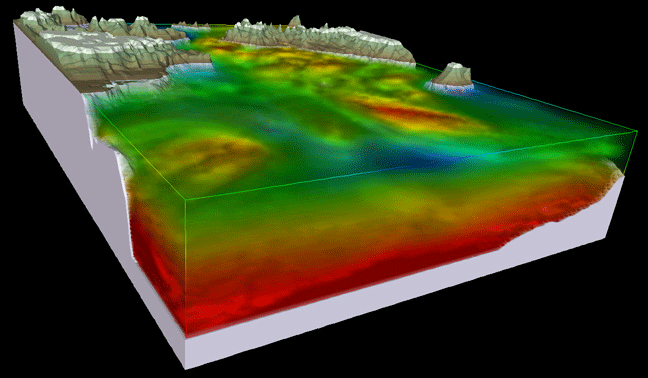
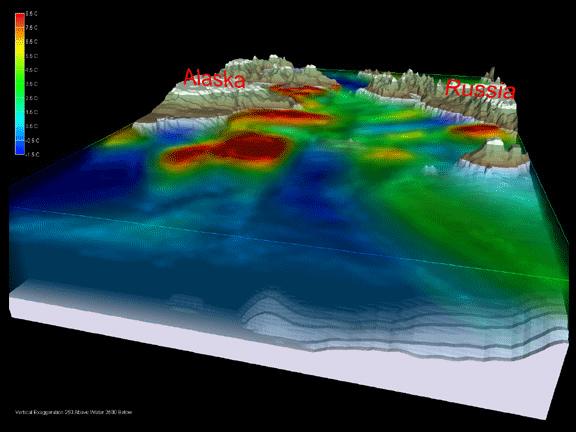
The US National Oceanic and Atmospheric Administration's Pacific Marine Environmental Laboratory and Russia conducted oceanographic research in the Chukchi Sea in September and October 1990 to collect the data represented in these visualizations that were created with EVS-PRO. Waters from the Bering Sea feed the Chukchi Sea through the Bering Strait before entering the Arctic Ocean. The Chukchi serves as a rich feeding ground for Bowhead whales and other marine mammals, and serves as a transition area for pelagic seabird species.
|
||||||||||||||||
|
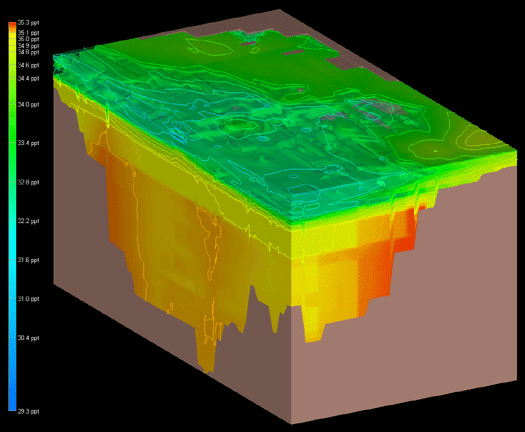
Salinity Distributions in the Chukchi Sea in Fall 1990 viewed from the Northwest. Vertical Exaggeration is 250 above water and 2500 below water.
Temperature distributions in the Chukchi Sea in Fall 1990. Data provided courtesy: U.S. NOAA's Pacific Marine Environmental Laboratory.
In the figure above, regions with salinity values below 33.3 are shown transparent to reveal the shallow water high salinity structures. These areas of high salinity often attract marine life. Ornis Consult A/S of Copenhagen, Denmark performed this investigation with EVS-PRO as part of their applied marine ecosystem research on the Skagerrak. The Skagerrak is the outer part of the transitional area between the Baltic Sea and the North Sea, and is connected with the North Atlantic through the Norwegian Trench. The distribution of water masses and fronts in the Skagerrak is controlled by a permanent counter-clockwise circulation at depth and a highly dynamic, primarily wind-driven circulation of up to five different surface water masses. EVS's three-dimensional kriging of CTD data was used to resolve the most stable frontal feature associated with the upwelling structure created by the large-scale circulation.
|